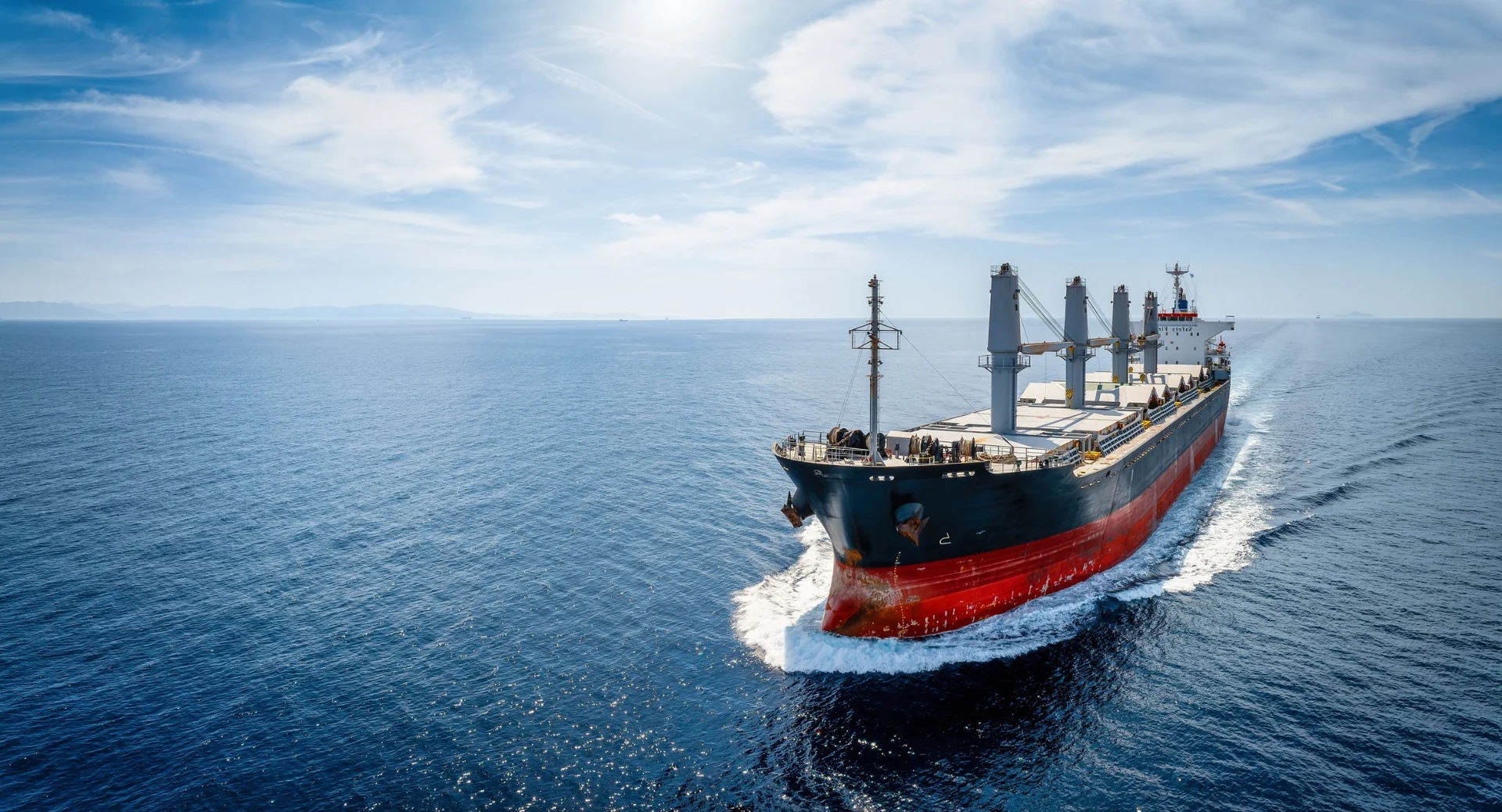
Full voyage heavy-lift charter from East Asia to Port Qasim, followed by specialized SPMT barge-to-road discharge for a regional grid expansion project.
⚓ Dedicated Maritime Transport Solutions
Ocean Chartering
Bespoke full and part vessel chartering solutions for heavy-lift project cargo, break-bulk, and high-volume commodities through Pakistan's major maritime gateways.
Full & Part VoyageDedicated Vessel Chartering
Heavy-Lift & OOGProject Cargo Capability
KPT · Port Qasim · GwadarPakistan Port Coverage
BIMCO StandardsCharter Party Governance
What Are You Moving?
Heavy Machinery
Industrial Modules
Wind Components
Power Equipment
Mining Gear
Bulk Commodities
Full Vessel Cargo
Ocean Chartering vs. Standard Sea Freight
Understanding when dedicated vessel solutions outperform scheduled liner container services.
| Operational Parameter | Standard Sea Freight (FCL/LCL) | Ocean Vessel Chartering (TLI) |
|---|---|---|
| Schedules & Routing | Fixed liner carrier loops & published schedules | Dedicated direct voyage & customized laycan dates |
| Cargo Dimensions | Restricted to ISO container dimensions (20'/40'/FR) | Unlimited out-of-gauge (OOG) & heavy-lift capacity |
| Port Accessibility | Major container hub ports only | Direct berth access to secondary & project-specific ports |
| Capacity Certainty | Subject to liner rolled cargo & carrier space caps | 100% exclusive vessel deck/hold capacity allocation |
| Cargo Handling | Standard automated port gantry cranes | Heavy-lift ship gear, tandem crane lifts & SPMT loading |
Specialized Chartering Solutions
Engineered maritime services designed for critical industrial supply chains.
Full Vessel Chartering
Complete vessel hire dedicated entirely to your cargo movement under standard BIMCO GENCON clauses, maximizing operational privacy, speed, and safety.
- Exclusive use of full holds & deck
- Direct non-stop transit to target port
- Ideal for high-tonnage project launches
Part Charter Solutions
Cost-effective ocean freight for large break-bulk or heavy machinery loads that require dedicated vessel space without incurring full charter voyage costs.
- Dedicated deck or hold space allocation
- Shared voyage fuel & operational costs
- Perfect for semi-bulk industrial shipments
Heavy-Lift & Breakbulk
Sourcing specialized multi-purpose and heavy-lift gear-equipped vessels capable of self-loading and discharging oversized assets up to several hundred tons.
- Onboard cranes up to 1,000 MT capacity
- Tandem crane lifting capability
- Specialized deck strength reinforcement
Cargo Engineering & Marine Technical Rigor
Vessel chartering is an engineering discipline. TLI ensures complete structural and mathematical alignment before vessel fixture.
-
3D Lift Studies & CoG Calculations
Precise determination of Center of Gravity (CoG) and lifting geometry to prevent vessel list and gear failure during load-out.
-
Sea Fastening & Lashing Calculations
Custom engineering design for deck stopper plates, turnbuckles, and lashing arrangements under severe sea-state models.
-
Deck Load Density Analysis
Verifying vessel deck strength limits (MT/m²) against heavy machinery footprints and designing load-spreading dunnage layouts.
Engineering Output Deliverables
- Approved Stowage & Securing Plan
- Marine Warranty Surveyor (MWS) Approval
- Tandem Lift Rigging Analysis
- Ballast & Vessel Stability Calculation
- Route Draught & Overhead Clearance Survey
Charter Execution Workflow
A systematic, 8-stage operational sequence ensuring technical accuracy and commercial safety.
STEP 1
Cargo Evaluation
Reviewing weight specs, CoG, drawing files, and laycan availability windows.
STEP 2
Vessel Sourcing
Matching requirements with open global fleet capacity and checking vessel deck ratings.
STEP 3
Commercial Fixture
Executing BIMCO standard charter party contracts with clear laytime & demurrage terms.
STEP 4
Cargo Engineering
Finalizing 3D lifting plans, lashing force math, and port captaincy protocols.
STEP 5
Port Load-Out
Supervising quay operations, tandem crane lifts, draft surveys, and sea fastening.
STEP 6
Ocean Transit
Real-time satellite tracking, weather routing, and daily progress reporting.
STEP 7
Port Discharge
On-site supercargo oversight during un-lashing and cargo discharge to SPMT trailers.
STEP 8
Final Completion
Joint inspection reports, Statement of Facts (SOF) sign-off, and final delivery clearance.
Vessel Fleet & Equipment Selection Guide
Matching your specific cargo characteristics to the correct vessel design.
Heavy Lift Vessel (HLV)
Equipped with high-capacity onboard gear (up to 1,000+ MT) for self-sustaining heavy loads.
Capacity: Heavy Project ModulesMultipurpose Vessel (MPP)
Flexible box-shaped holds and tween-decks, suitable for mixed breakbulk and container cargo.
Capacity: General Machinery & BreakbulkGeared Dry Bulk Carrier
Fitted with onboard cranes and grabs for efficient handling of loose bulk commodities.
Capacity: Minerals, Cement, FertilizersRo-Ro Vessels
Ramp-equipped for wheeled, tracked, or trailer-loaded heavy rolling machinery.
Capacity: Rolling Stock & VehiclesPort & Marine Operations in Pakistan
Deep local intelligence and direct operational supervision at Pakistan's primary maritime gateways.
Karachi Port Trust (KPT)
East & West WharvesFull vessel charter management for heavy breakbulk, machinery, and project imports/exports through berth-side mobile harbor cranes and floating crane operations.
Port Muhammad Bin Qasim
PQTL & MW-1 TerminalDedicated handling of high-tonnage dry bulk commodities, steel coils, and heavy project equipment with direct highway connectivity for inland transport.
Gwadar Deep Water Port
CPEC GatewayStrategic ocean charter hub handling transit trade and heavy project shipments destined for Central Asia, CPEC corridors, and regional energy initiatives.
Some Cargo Cannot Wait For Scheduled Sailings.
Dedicated Vessels. Engineered Planning. Global Execution.
VESSEL CHARTER CONSULTATION
Request Charter Inquiry
Speak with TLI’s marine team for vessel availability, route feasibility and charter rate assessment.
- Direct Access to Global Shipowner Networks
- On-Ground Port Captaincy at Key Pakistan Gateways
- BIMCO Contractual Framework Support
- End-to-End Multimodal Integration
OCEAN CHARTER DESK
(021) 38291000
chartering@targetlogistics.com.pk
Full/part voyage, heavy-lift and breakbulk charter support.
Frequently Asked Questions
Ocean chartering answer sandwiches covering vessel selection, contracts, port operations, heavy lift handling and charter execution.
What is the main operational difference between ocean vessel chartering and standard container shipping?
Target Logistics International (Pvt.) Ltd. differentiates dedicated ocean chartering from standard container liner shipping through cargo capacity, schedule control, and routing flexibility. While standard ocean freight depends on fixed liner schedules and standardized ISO container limits, ocean chartering provides dedicated, exclusive ship capacity or full vessel hire tailored to specialized project requirements. TLI secures direct berth access to primary and project specific ports without carrier space caps. This customized approach allows shippers to transport oversized, heavy lift, or high volume breakbulk cargo efficiently without facing container loading restrictions.
What contractual standards does TLI use to structure ocean charter party agreements?
Managing financial liability in maritime transport demands transparent charter party agreements and clear laytime terms. Target Logistics International (Pvt.) Ltd. structures all full and part voyage charter fixtures under globally recognized BIMCO standards, including standard GENCON and NYPE contracts. Our chartering team establishes unambiguous laytime guidelines, clear loading or discharge rates, and transparent demurrage terms prior to vessel commitment. This standardized legal backing safeguards project owners from unexpected port delay claims, ensuring predictable charter costs, reliable laycan commitments, and smooth legal execution throughout ocean transit.
How does TLI manage ocean chartering and breakbulk operations at Karachi Port Trust (KPT)?
Handling heavy machinery and project shipments through Karachi Port requires active, on site berth supervision and specialized gear. Target Logistics International (Pvt.) Ltd. oversees full and part charter operations across KPT’s East and West Wharves, coordinating mobile harbor crane access, floating crane deployments, and stevedoring crews directly. TLI’s port captains monitor vessel loading and discharge rates around the clock to prevent berth congestion. This active ground presence ensures fast vessel turnaround times and safe cargo transfers from ship holds to heavy haul transport trailers.
What chartering capabilities does TLI offer at Port Qasim and Gwadar Deep Water Port?
Moving high tonnage dry bulk or heavy project modules requires deep water port access with direct highway transport connections. Target Logistics International (Pvt.) Ltd. handles dedicated charter fixtures across Port Muhammad Bin Qasim (PQTL/MW-1) and Gwadar Deep Water Port. Our teams manage bulk clinker, fertilizer, and industrial steel shipments at Port Qasim while utilizing Gwadar as a key strategic gateway for regional transit trade and CPEC corridors. TLI’s port management keeps vessel operations compliant with local marine authority regulations across all primary trade channels.
How does TLI source heavy lift vessels for oversized, out of gauge (OOG) industrial equipment?
Transporting heavy industrial units such as turbines, power transformers, and chemical reactors demands specialized ship crane capacity. Target Logistics International (Pvt.) Ltd. sources heavy lift vessels (HLVs) equipped with heavy onboard gear capable of lifting loads up to 1,000+ metric tons. TLI matches your cargo dimensions and weight profiles with open global fleet capacity to secure appropriate ship decks and tandem crane setups. This specialized fleet sourcing allows out of gauge industrial components to be safely loaded, transported, and discharged at destination quays.
What vessel types does TLI charter for dry bulk commodities and general breakbulk cargo?
Matching specific material properties with the correct ship design is essential to prevent cargo damage and minimize voyage costs. Target Logistics International (Pvt.) Ltd. maintains an extensive carrier network to charter geared bulk carriers, multipurpose vessels (MPPs), and Ro Ro fleets. We arrange geared bulk ships with grabs for loose minerals, agricultural loads, or fertilizers, while using box shaped MPP vessels for mixed steel coils and machinery. TLI selects vessel structures that maximize space utilization and protect cargo integrity throughout ocean transit.
What marine engineering analyses does TLI execute prior to heavy lift charter fixtures?
Preventing crane stress, load instability, and vessel list requires detailed mathematical calculations before lifting heavy project cargo. Target Logistics International (Pvt.) Ltd. performs thorough cargo engineering studies, including 3D lift simulations, Center of Gravity (CoG) calculations, and crane radius checks. Our marine engineers assess deck load density limits (MT/m²) and design custom load spreading dunnage layouts to protect ship decks. These pre fixture engineering checks eliminate physical risks, ensuring safe crane operations and structural stability throughout loading, transit, and discharge.
How does TLI engineer sea fastening and securing plans for open ocean voyages?
Surviving severe sea conditions demands engineered cargo securing protocols that go far beyond standard rope tying. Target Logistics International (Pvt.) Ltd. designs customized sea fastening and lashing plans using mathematical force modeling to withstand heavy ocean swells. Our technical team calculates forces for stopper plates, turnbuckles, and lashing chains, securing Marine Warranty Surveyor (MWS) approvals prior to departure. This rigorous marine engineering prevents cargo movement in transit, satisfying international safety standards and protecting high value industrial assets across rough sea corridors.
What workflow steps does TLI follow to manage an ocean chartering project from start to finish?
Executing an ocean charter safely requires absolute coordination from initial cargo review through final berth discharge. Target Logistics International (Pvt.) Ltd. uses a structured 8 stage operational workflow: cargo evaluation, vessel sourcing, commercial contract fixture, cargo engineering, quay load out supervision, ocean transit, quay discharge, and final clearance. Each stage is managed by dedicated chartering specialists and experienced supercargoes on site. This systematic operational model ensures complete technical accuracy, strict safety compliance, and seamless execution across every step of your ocean voyage.
How does TLI protect charterers against laytime disputes and expensive port demurrage charges?
Unplanned delays during loading or discharge operations can quickly lead to expensive demurrage fees if laytime is not recorded accurately. Target Logistics International (Pvt.) Ltd. protects clients by deploying experienced port captains and supercargoes directly to berth side. Our ground supervisors monitor loading speeds, document weather delays, and maintain detailed, accurate Statements of Facts (SOF). By verifying working hours on site, TLI resolves laytime disputes immediately, defending charterers against unearned penalty charges and keeping port operations running efficiently.
How does TLI provide real time tracking and digital visibility during an ocean charter transit?
Maintaining clear operational control over dedicated ship charters requires continuous tracking and real time updates. Target Logistics International (Pvt.) Ltd. provides real time vessel telemetry, satellite position tracking, and milestone updates through a dedicated digital project control interface. Shippers receive live updates on vessel position coordinates, speed, ETA milestones, sea fastening inspection logs, and weather forecasts. This end to end transparency keeps project managers fully informed, allowing coordinated inland transport arrangements at destination ports well before vessel arrival.
How does TLI tailor its ocean chartering services for energy, renewable, and bulk commodity sectors?
Different industrial sectors require specialized cargo handling equipment and tailored charter structures. Target Logistics International (Pvt.) Ltd. designs customized chartering solutions for power generation, wind energy projects, and bulk commodity traders. Whether delivering 350 ton power transformers via specialized heavy lift vessels, transporting 80 meter wind turbine blades on deck carriers, or coordinating high volume dry bulk discharges under moisture controlled conditions, TLI adapts every vessel fixture to sector specifications. This industry specific expertise guarantees safe, compliant cargo movements for complex global infrastructure projects.